The IST-PhysFront Symposium had its first edition this year (September 10), organized by the Department of Physics at Instituto Superior Técnico (DF-IST) The event highlighted cutting-edge research carried out by DF-IST researchers and students, setting the stage for what aims to become an annual scientific gathering.
At this symposium, Professor Marco Piccardo outlined his vision for analog neural networks implemented in optical diffractive architectures. This consists in using optical neural networks not only for data analysis and prediction but as physical processors that realize transformations on structured light which are intractable to design with conventional algorithms. The Multimode Photonics Group at INESC MN also showcased two posters: Maria Ines Nunes on the challenge of giving texture to light and Joana Bonito on the efforts of making an all-optical switch. The ultimate goal is to progress toward fast, energy-efficient photonic processing and new regimes of light control.
Professor Susana Freitas contributed an insightful overview of her team’s cutting-edge research on integrating Machine Learning into the development of spintronic sensors embedded beneath magnetic skins. This innovative approach aims to create smarter, adaptive tactile sensors capable of enhancing artificial touch. Her presentation highlighted how tactile perception can be significantly improved by combining fine texture sensitivity with large-area sensor coverage—aiming at more responsive and intelligent sensing technologies.
At the symposium, INESC MN student Carolina Antunes received the Best Poster Award for her work on Wireless Triboelectric Wearable Sensors for Self-Powered Biomechanical Monitoring.
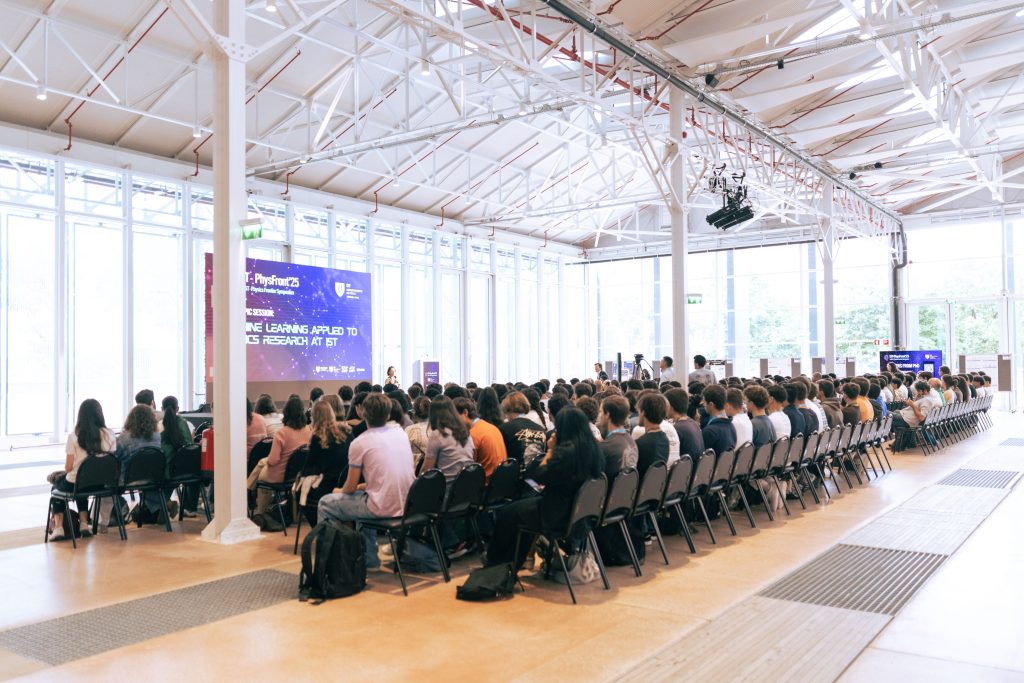
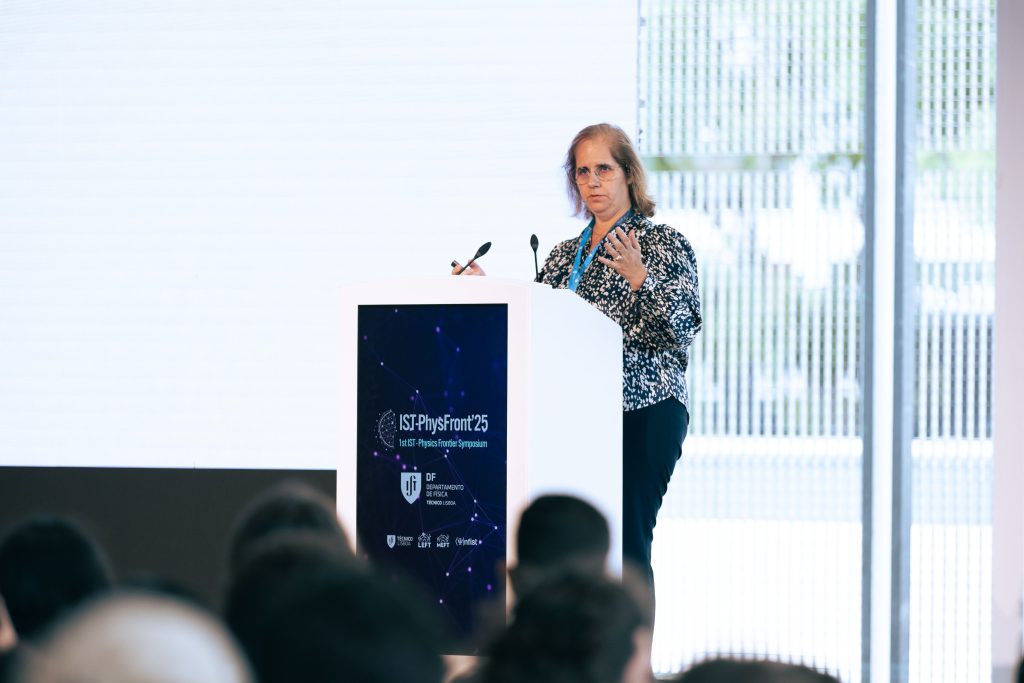
*Image rights: Técnico Lisboa